Inside Our Winter 2026 Teen Entrepreneurship Pitch Session: What Students Built and Learned

A real teen entrepreneurship pitch session gives students hands on experience in building, selling, and presenting ideas
Students in the Winter 2026 cohort moved from concepts to real products, customer conversations, and early sales
Communication, confidence, and execution were at the center of every student’s growth
Introduction
What happens when middle and high school students are given the opportunity to think like real entrepreneurs and then actually step into that role?
At the conclusion of our Winter 2026 cohort, students participated in a live pitch session where they presented their ventures to judges, parents, and an engaged audience. This was not a classroom presentation. It was a real world experience where students stood up, shared their ideas, answered tough questions, and demonstrated what they had built.
For many parents in the room, one thing became immediately clear. Students are capable of far more than we often expect when they are given the chance to take ownership, solve problems, and execute.
What Makes a Teen Entrepreneurship Pitch Session So Powerful
A teen entrepreneurship pitch session is powerful because it moves learning from theory into action.

Each student pitched individually in a format modeled after real investor presentations. They explained the problem they identified, the customer they were serving, the product or service they created, and how they planned to grow.
Judges evaluated each pitch based on three key dimensions: idea strength, customer understanding, and communication. After each presentation, students participated in a live Q&A where they had to think on their feet and respond with clarity and confidence.
Parents were not just observers. They were part of an environment where students were treated as capable young founders, expected to articulate their thinking and stand behind their work.
This kind of experience builds a different level of confidence because it is earned through doing.
From Ideas to Execution: What Students Actually Built
One of the most exciting aspects of this cohort was how quickly students moved beyond ideas into real execution.
Every student engaged with potential customers to validate their thinking. Most took it a step further and generated their first sales. This shift, from thinking about an idea to actually testing it in the real world, is where meaningful learning happens.
Real Student Startups from the Winter 2026 Cohort
The range of ventures reflected just how broadly students can apply entrepreneurial thinking across industries:
SockLock (Aadhya) created silicone bands that help keep socks paired during laundry, solving a small but common household frustration

ClipCable (Rishab) designed a modular cable organizer to reduce clutter and improve workspace organization

SnappySole (Maria) introduced customizable snap on shoe soles that allow for personalization and self expression

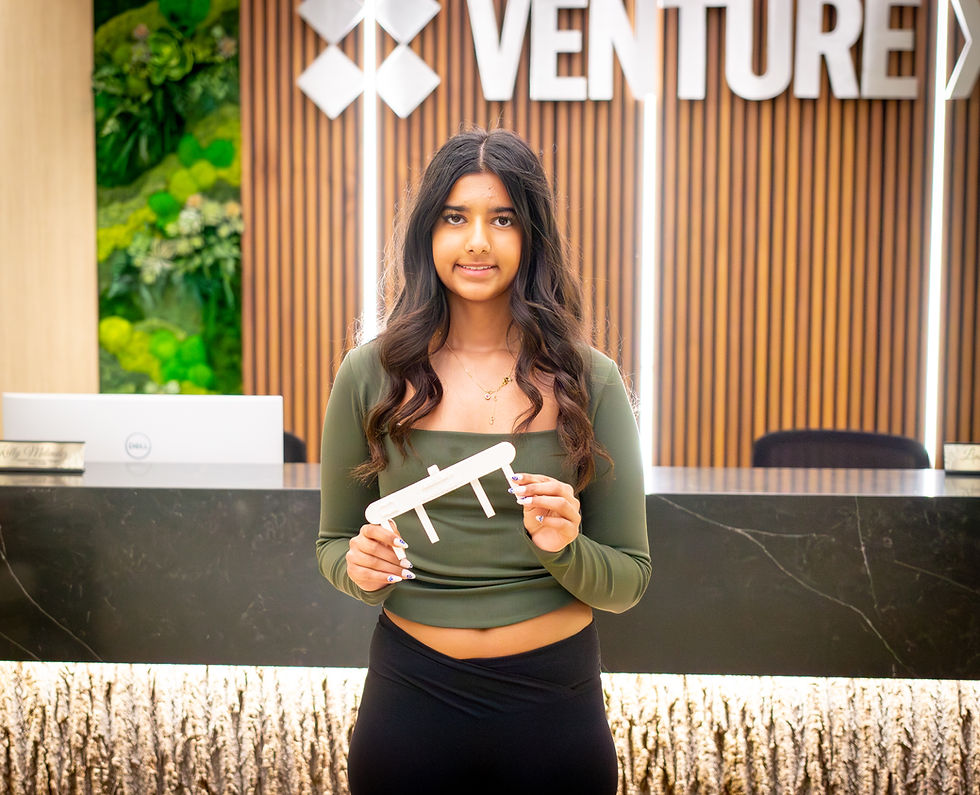
GripStix (Nia) developed a chopstick training tool to help beginners learn proper technique

BookBuddy (Anshika) built a hands free book holder to support comfortable reading and studying
Walker Seasonal (Pierce) launched a year round yard care service offering lawn maintenance, seasonal cleanup, and snow removal

These ventures spanned consumer products, customizable goods, and local services. Some students explored manufacturing oriented ideas using physical products, while others leaned into service based businesses that required operations, customer management, and reliability.
This diversity reinforces an important idea for students and parents alike. Entrepreneurship is not limited to technology startups. It exists in every sector, from household products to landscaping services.
The Skills Parents Often Don’t See But Matter Most

While the final pitches were impressive, the deeper value came from the skills students developed along the way.
Students learned how to identify real problems by observing their surroundings and asking better questions. They defined clear customer segments instead of trying to appeal to everyone. They practiced communicating value in a way that others could quickly understand.
Sales became a particularly important learning experience. Reaching out to potential customers, explaining a product, and asking for a purchase requires courage and clarity. These are skills that translate directly into leadership and future career success.
Perhaps most importantly, students demonstrated that they are not naturally risk averse. When given the right environment, they are willing to test ideas, learn from feedback, and keep moving forward.
How the New Rapid Prototyping Lab Changes the Game
A new addition to the Launchpad Juniors program this year was our rapid prototyping lab, a dedicated maker space designed to help students bring ideas to life faster.
Using tools such as 3D printing and hands on building techniques, students were able to quickly move from concept to physical product. Instead of waiting weeks or months, they could iterate, test, and improve in real time.
This matters because execution is where ideas gain value. When students can physically build and refine their solutions, they develop a much deeper understanding of design, usability, and customer needs.
The maker space has become a powerful bridge between creativity and real world application.
A Moment of Recognition and Growth
The pitch session was both a celebration and a meaningful milestone.
Students presented in front of judges and peers, answered thoughtful questions, and supported one another in a collaborative environment. While the setting encouraged excellence, it also maintained a spirit of encouragement and shared learning.
Nia, the founder of GripStix, was recognized with the ‘Best Startup Award, Winter 2026’ for her strong execution, clear customer focus, and confident presentation.

At the same time, every student left the session having accomplished something significant. They had taken an idea, turned it into something tangible, and stood up to share it with others.
That experience builds lasting confidence.
What Parents Should Take Away
For parents, experiences like this highlight why entrepreneurship is such a valuable life skill.
It combines communication, leadership, creativity, and problem solving into a single, practical journey. Students are not just learning concepts. They are applying them in real situations that require initiative and responsibility.
Perhaps most importantly, it challenges a common assumption. Young people are often more ready than we think. When given the opportunity, they step up, learn quickly, and take ownership of their work.
Conclusion
The Winter 2026 pitch session was a reminder of what is possible when students are encouraged to move beyond passive learning and into real world action.
They identified problems, built solutions, engaged customers, and communicated their ideas with confidence. These are not just entrepreneurial skills. They are life skills that will serve them in any path they choose.
At Launchpad Juniors, we continue to see that when students are trusted with meaningful challenges, they rise to meet them. And in doing so, they begin to see themselves not just as learners, but as creators, problem solvers, and future innovators.

Comments